20 Inspiring Japanese Home Office Designs
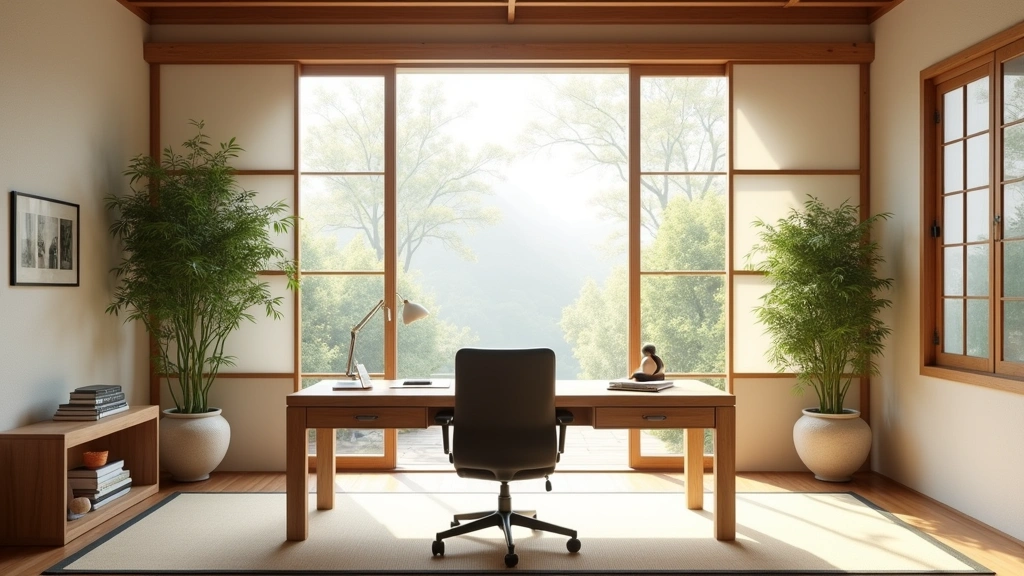
Transforming your workspace into a sanctuary of productivity is possible with Japanese home office designs.
These spaces emphasize minimalist aesthetics, natural materials, and a sense of tranquility that’s hard to resist.
From tatami mats to shoji screens, each design element plays a significant role in crafting an environment that fosters creativity and focus.
Let’s explore 20 stunning Japanese-inspired home office designs that will elevate your workspace and inspire you to create more.
1. Zen Minimalism
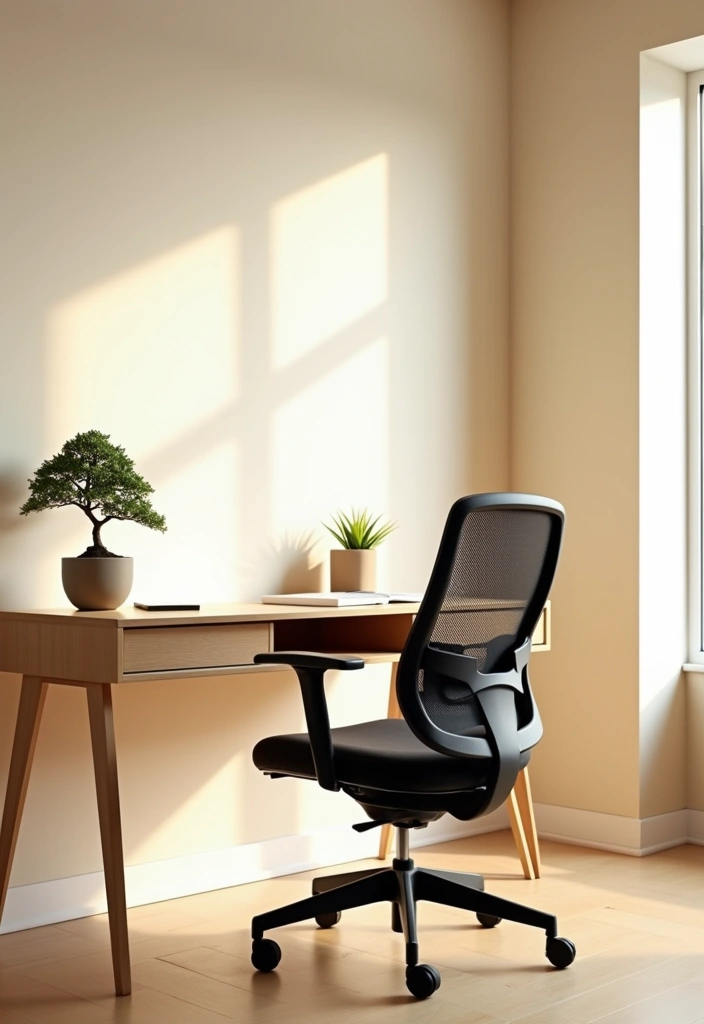
Zen minimalism is at the heart of Japanese home office design, promoting simplicity and clarity.
Furnishings are sparse and purposeful, ensuring that every item contributes to the overall serenity of the space.
Natural wood tones and neutral colors create an inviting atmosphere, while careful placement of decorative elements, like a single bonsai, adds character without clutter.
This approach not only enhances productivity but also creates a calming environment that helps to reduce stress.
2. Nature-Inspired Decor
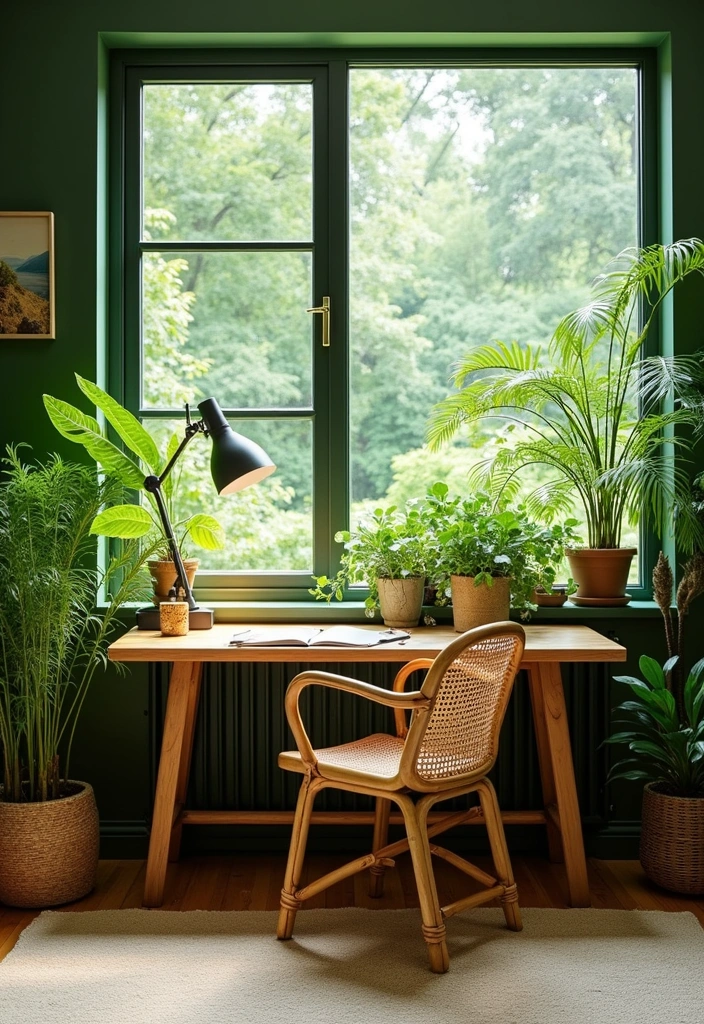
Bringing nature indoors is a key aspect of Japanese design, and it can greatly enhance your home office.
Integrating elements like indoor plants, natural light, and earthy colors creates a refreshing workspace.
Bamboo or rattan furniture can add a unique touch, while large windows allow for an abundance of light, making the space feel alive and inviting.
This connection to nature is known to boost productivity and creativity, making it a perfect choice for a home office.
3. Futuristic Aesthetics
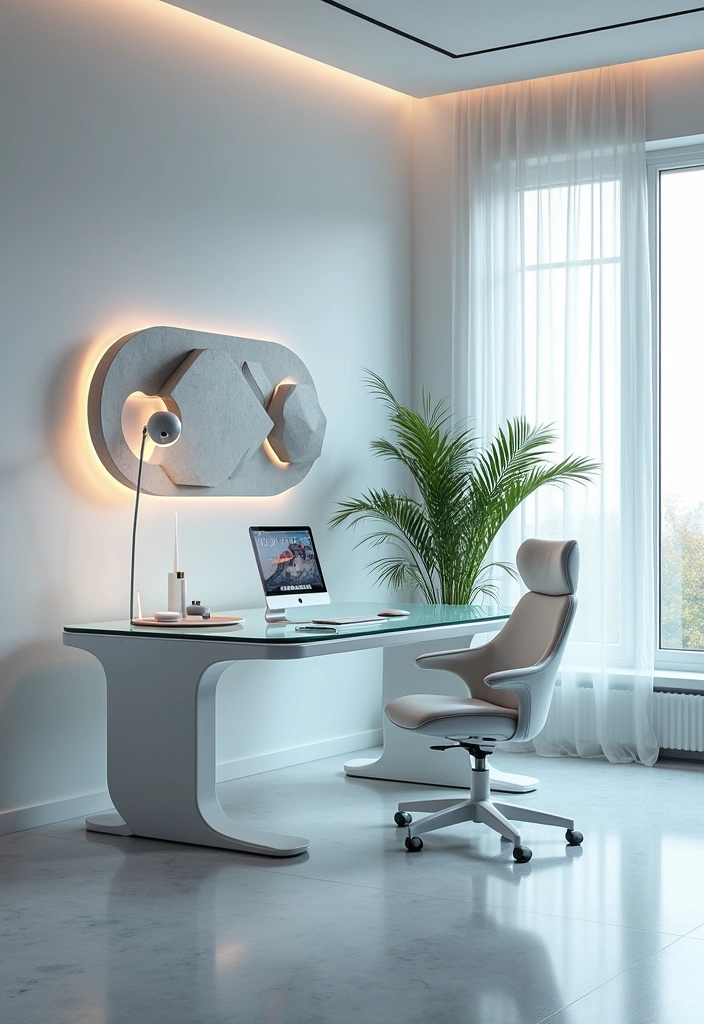
Japanese design often blends the traditional with the modern, creating spaces that feel innovative yet rooted in culture.
A futuristic aesthetic in your home office might include sleek furniture made from materials like metal or glass, paired with smart technology.
Minimalistic designs, combined with cutting-edge ergonomics, can create a high-tech workspace that promotes efficiency.
This fusion of past and future reflects the dynamic nature of Japanese culture, making it a stylish choice for the modern professional.
4. Tatami Mat Workspaces
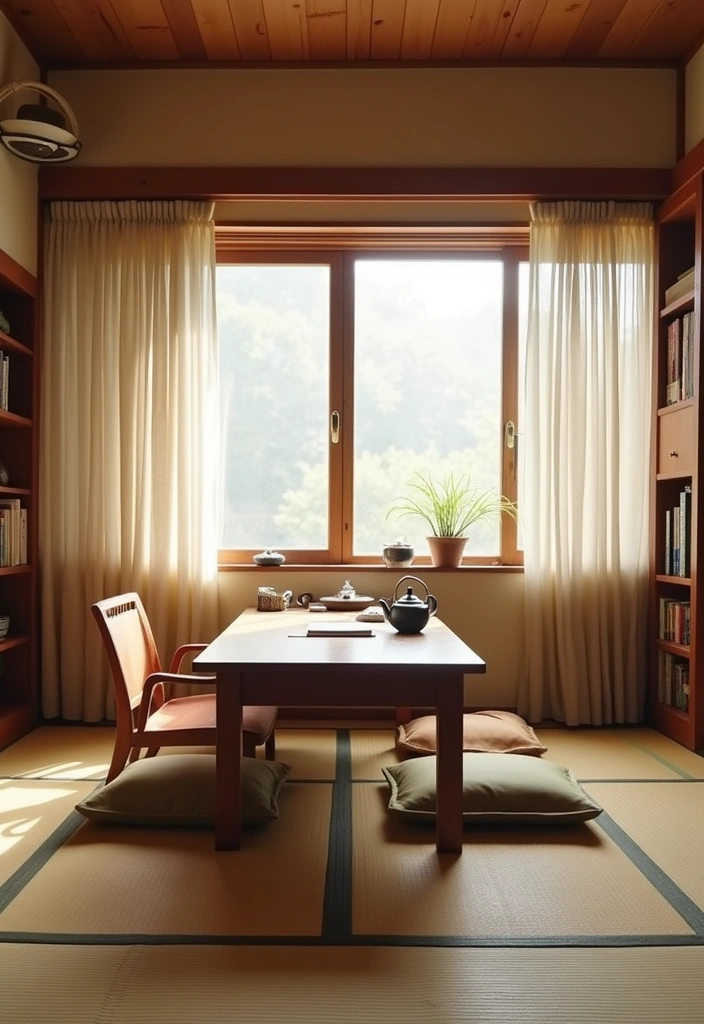
Tatami mats are a staple in traditional Japanese interiors and can be creatively adapted for a modern home office.
These mats offer a unique aesthetic and can provide comfort and warmth to your workspace.
Setting up a low desk with cushions on tatami mats can create a cozy and inviting atmosphere, encouraging a relaxed yet productive mindset.
This approach not only showcases cultural elements but also promotes a healthy posture by allowing you to work in a seated position that is natural to the body.
5. Shoji Screen Dividers
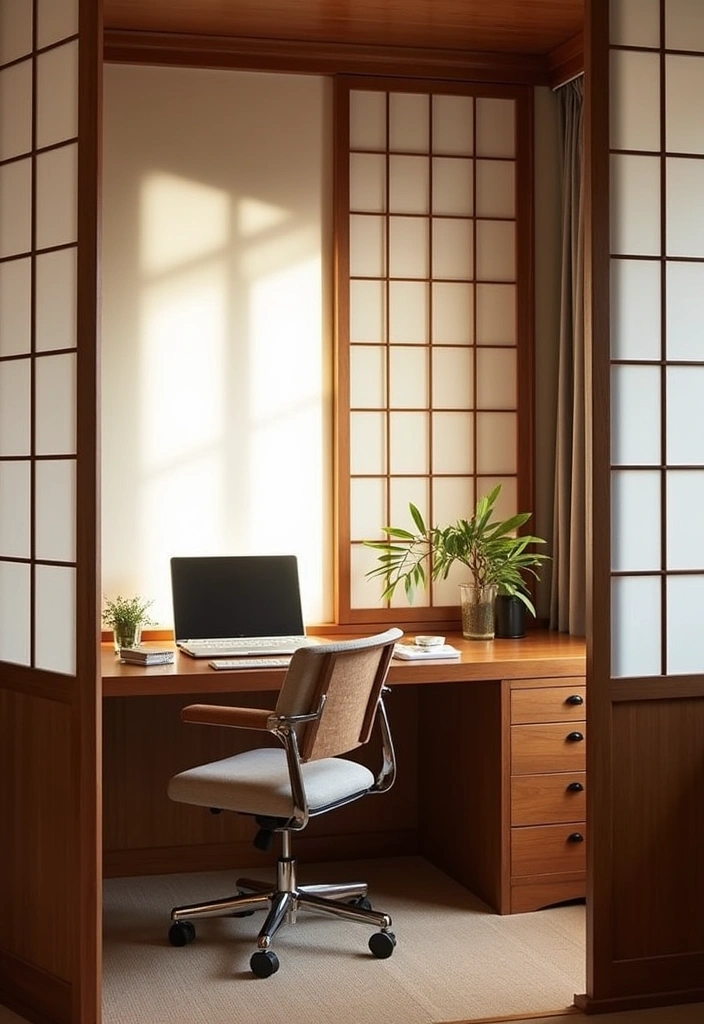
Shoji screens are a beautiful way to add privacy and style to your home office.
These traditional sliding doors, made of wood and rice paper, allow soft light to flow into the room while dividing spaces.
Using shoji screens can create a designated workspace within a larger area, fostering focus and reducing distractions.
They are not only functional but also enhance the aesthetic appeal, adding a touch of elegance to your office environment.
6. Warm Wooden Accents
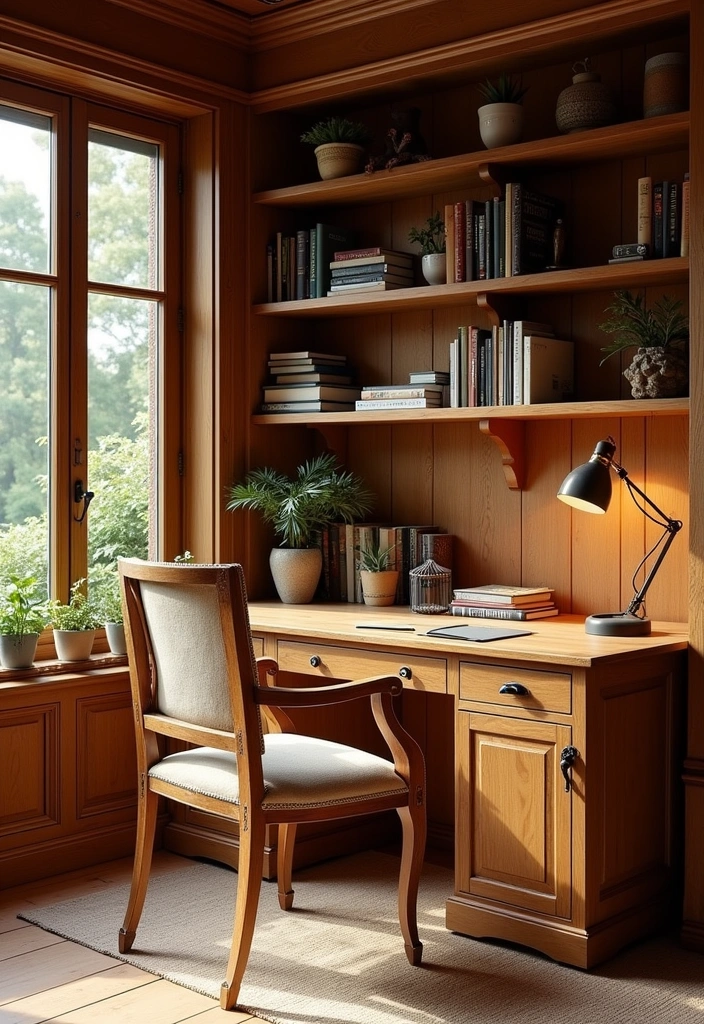
Incorporating warm wooden accents can create a welcoming and calming atmosphere in your Japanese home office.
Furniture made from natural wood not only adds warmth but also promotes a sense of stability and comfort.
Consider using wooden shelves, desks, and decor to create a cohesive look that brings the outdoors in.
This design choice aligns with the minimalist philosophy, emphasizing quality over quantity and enhancing overall productivity.
7. Calming Color Palettes
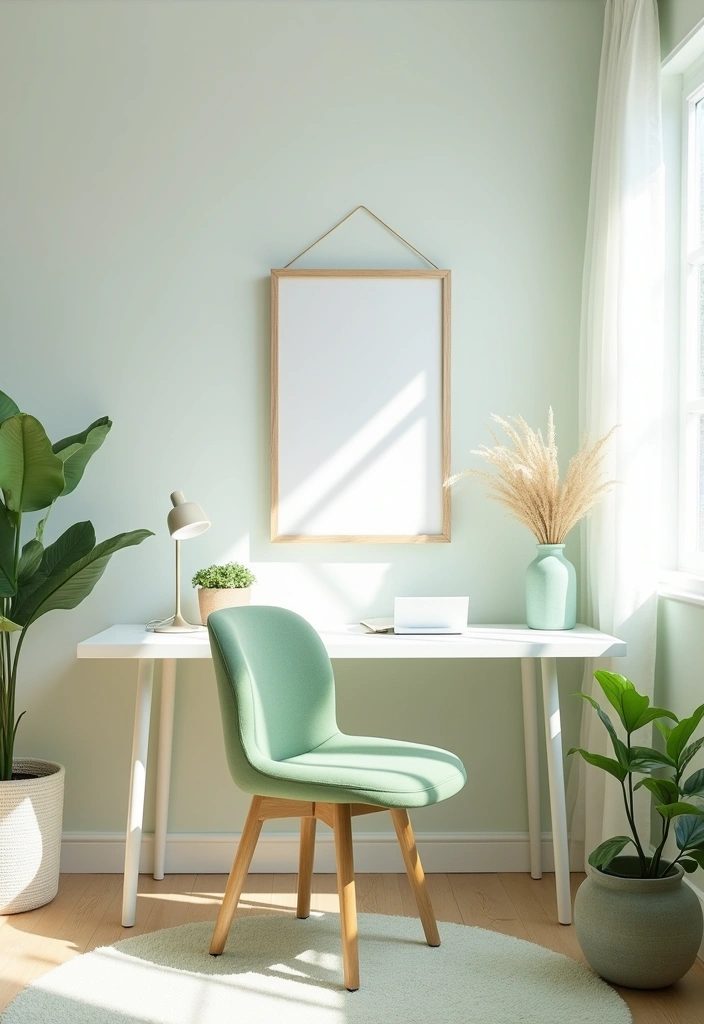
The colors you choose for your home office can significantly impact your mood and productivity.
Japanese design often utilizes calming color palettes, featuring soft whites, natural wood tones, and muted greens or blues.
These colors create a tranquil environment that can help reduce stress and increase focus.
By carefully selecting your workspace colors, you can cultivate an atmosphere that encourages creativity and productivity.
8. Functional Storage Solutions
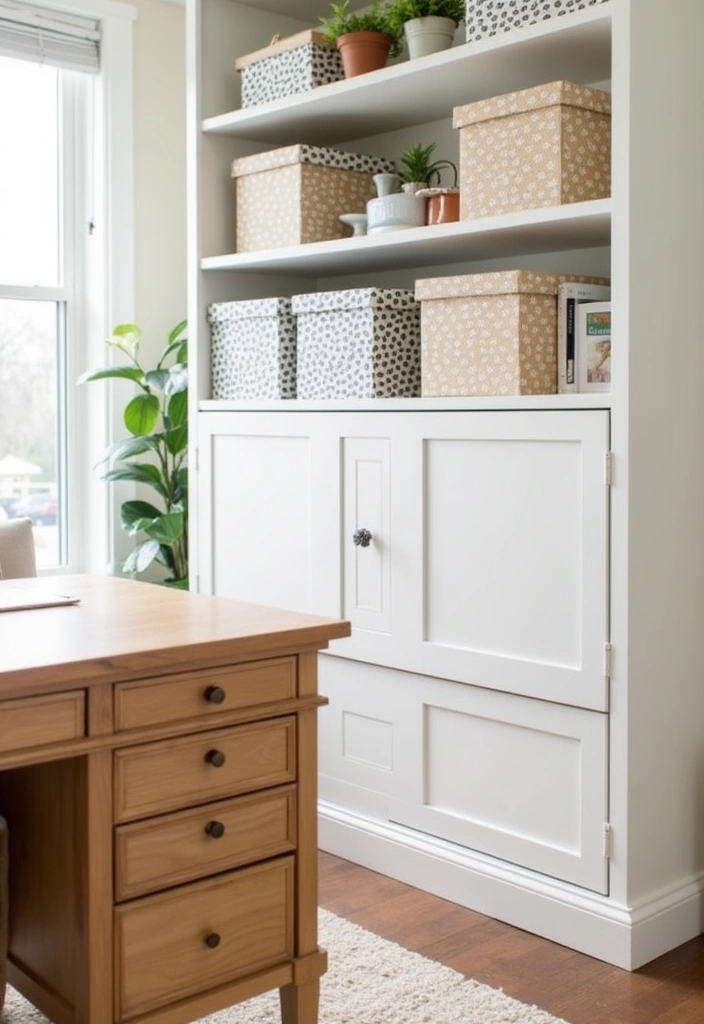
Effective storage solutions are vital for maintaining a clutter-free Japanese home office.
Incorporating functional furniture, like multi-purpose desks or shelves, can help keep your workspace organized while preserving the minimalist aesthetic.
Look for designs that blend seamlessly with your decor, such as wooden storage boxes or sleek filing cabinets.
These choices not only enhance your productivity by keeping essentials within reach but also contribute to the overall harmony of the space.
9. Artful Displays
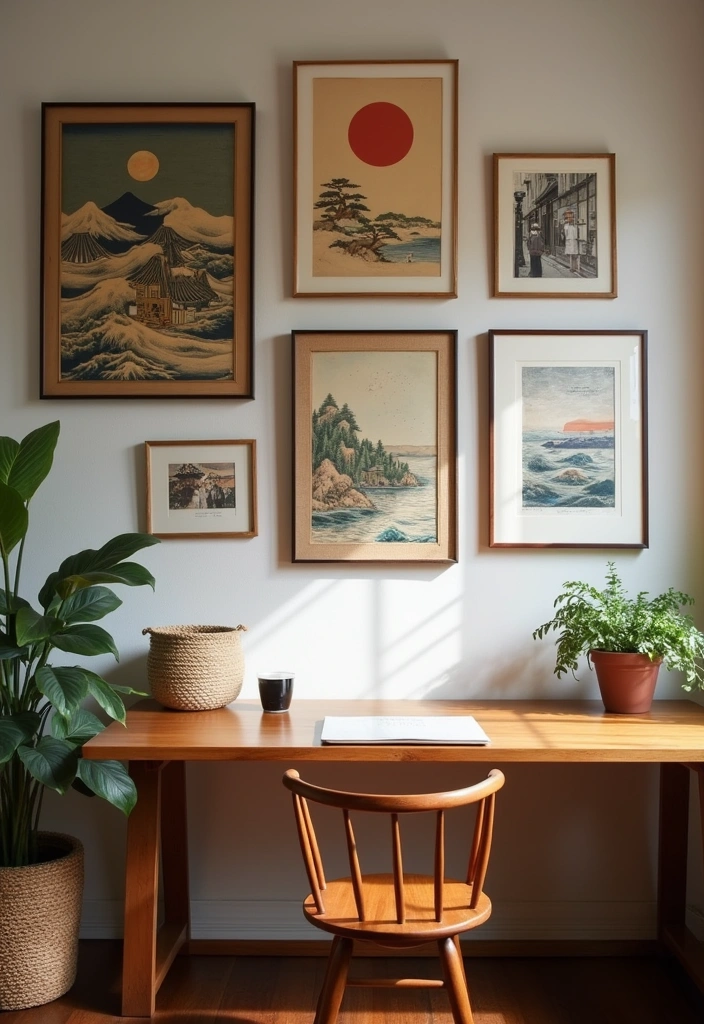
Incorporating art into your Japanese home office can enhance creativity and personal expression.
Displaying traditional Japanese artwork, like calligraphy or landscape paintings, can add cultural depth to your workspace.
Consider creating a gallery wall with a mix of framed art and personal photographs, ensuring it aligns with the overall aesthetic of calmness and simplicity.
This thoughtful curation not only beautifies your space but also inspires you daily.
10. Integrated Technology
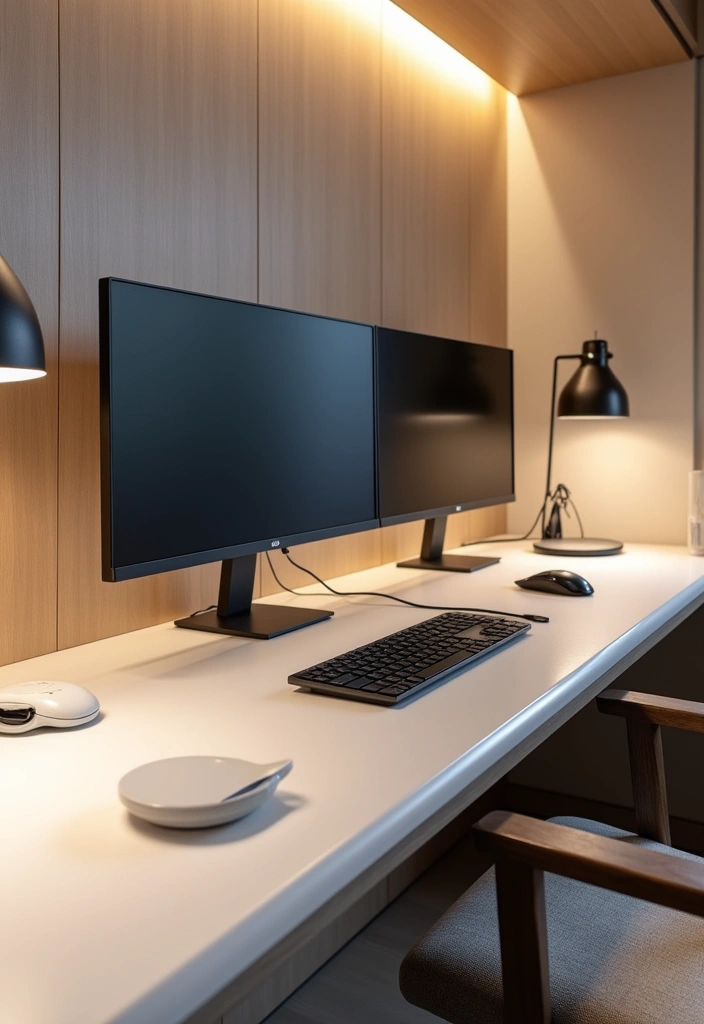
In today’s digital world, integrating technology into your Japanese home office is essential for productivity.
Choose devices that blend seamlessly with your decor, like wireless charging stations and sleek monitors that can be mounted on the wall.
Keeping cords organized and out of sight is crucial for maintaining a minimalist look, so consider using cable management solutions.
This modern approach ensures that your workspace remains functional while retaining its serene aesthetic.
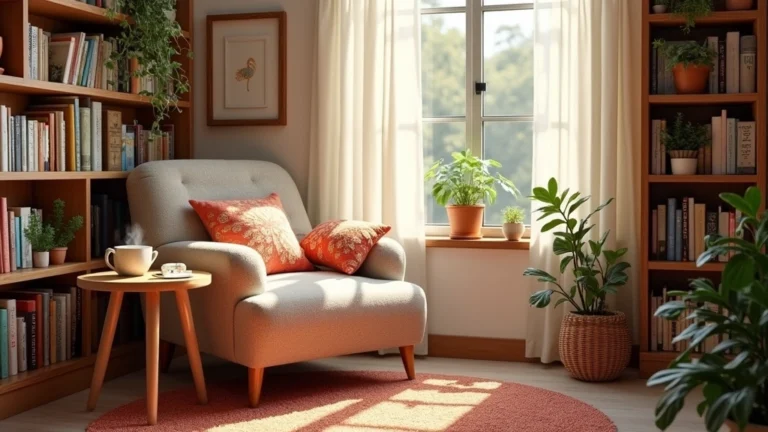
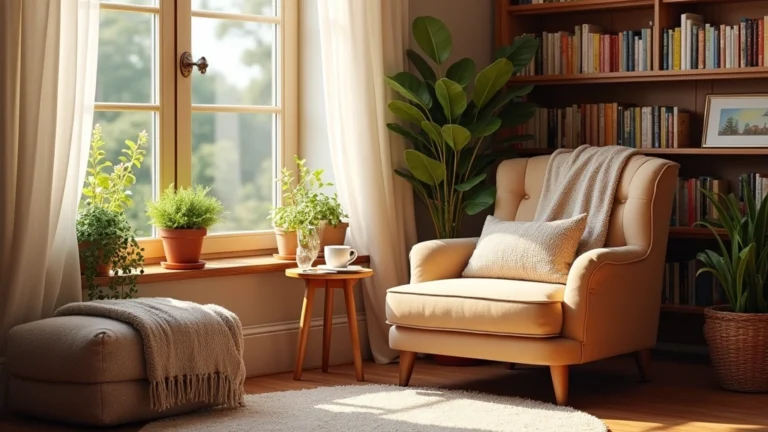
11. Cozy Reading Nooks
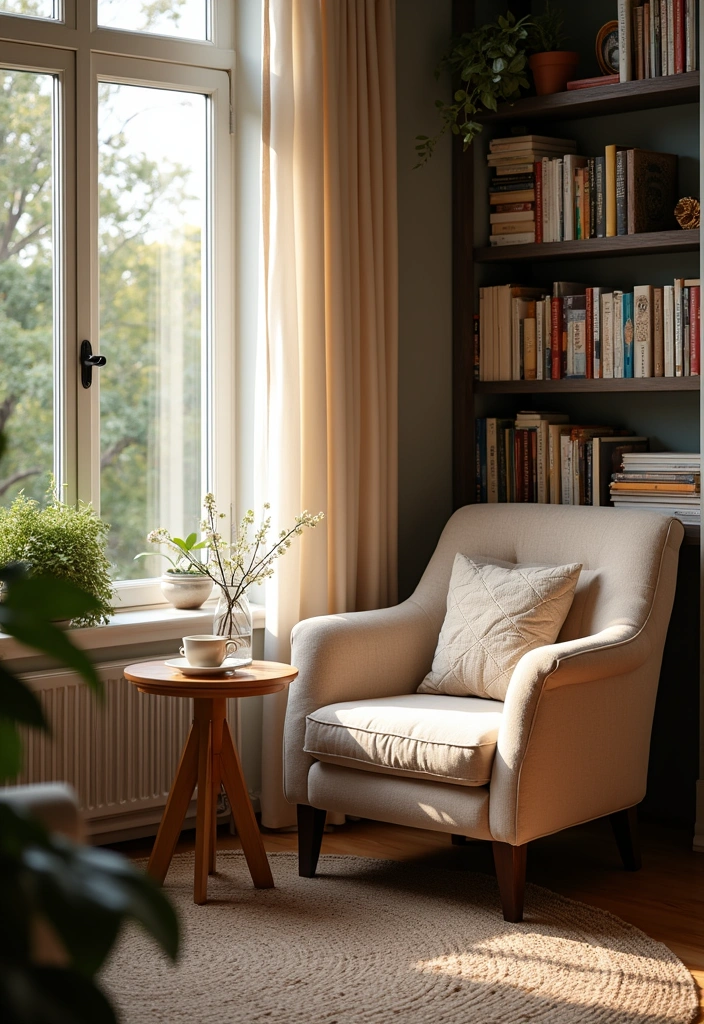
Creating a cozy reading nook in your Japanese home office can provide a perfect escape for inspiration and relaxation.
Consider adding a comfortable chair or a small sofa with soft cushions, surrounded by your favorite books and a small side table for tea.
This nook can serve as a space for breaks, allowing you to recharge and return to work with renewed focus.
Incorporating natural light and warm materials will make this area inviting and restful.
12. Floor-to-Ceiling Windows
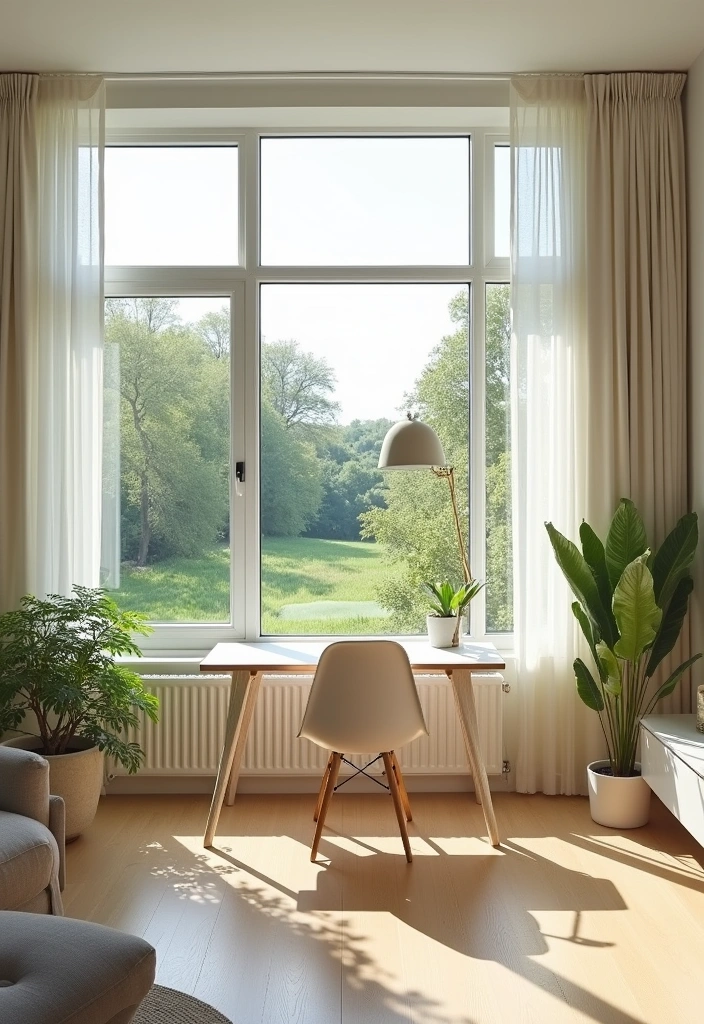
Maximizing natural light is a fundamental principle in Japanese design, and floor-to-ceiling windows are an excellent way to achieve this.
These large windows create a seamless connection between the indoors and outdoors, promoting a refreshing environment.
Natural light enhances focus and well-being, making it a crucial component of a productive workspace.
Consider framing your view with simple curtains that allow for privacy without obstructing light.
13. Japanese Aesthetic Influences
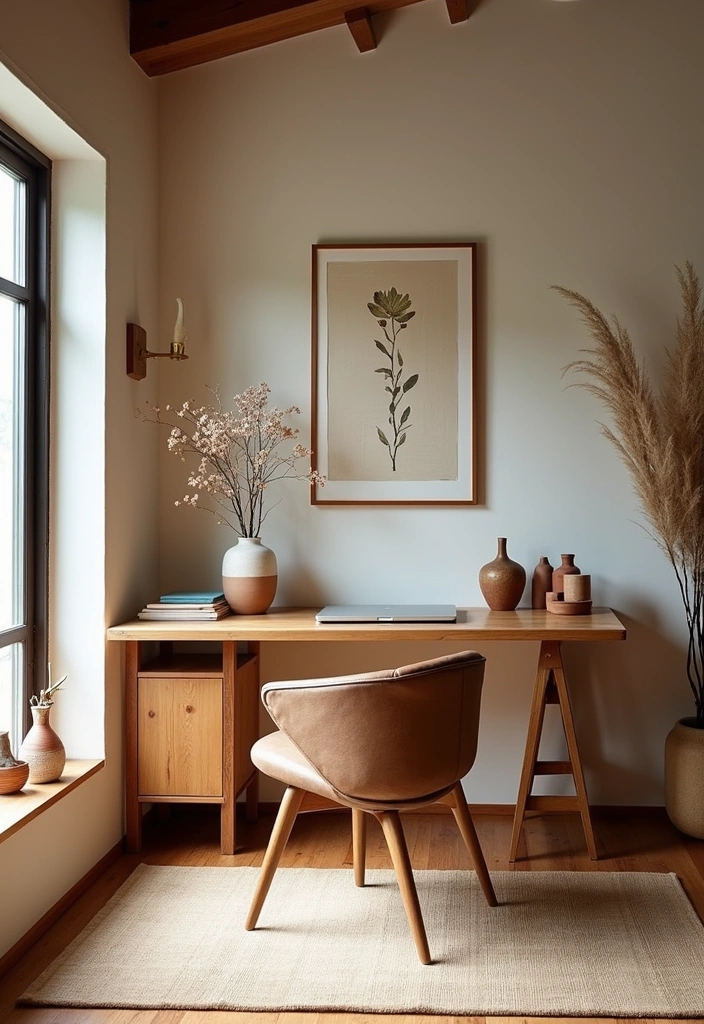
Infusing your home office with Japanese aesthetic influences means embracing wabi-sabi, the beauty of imperfection.
Incorporate handmade or artisanal items, like pottery or textiles, that reflect this philosophy.
This approach fosters a unique, personal space that encourages creativity.
By celebrating individuality and the natural world, your workspace becomes not just a place for productivity but also a reflection of your values and inspirations.
14. Soft Ambient Lighting
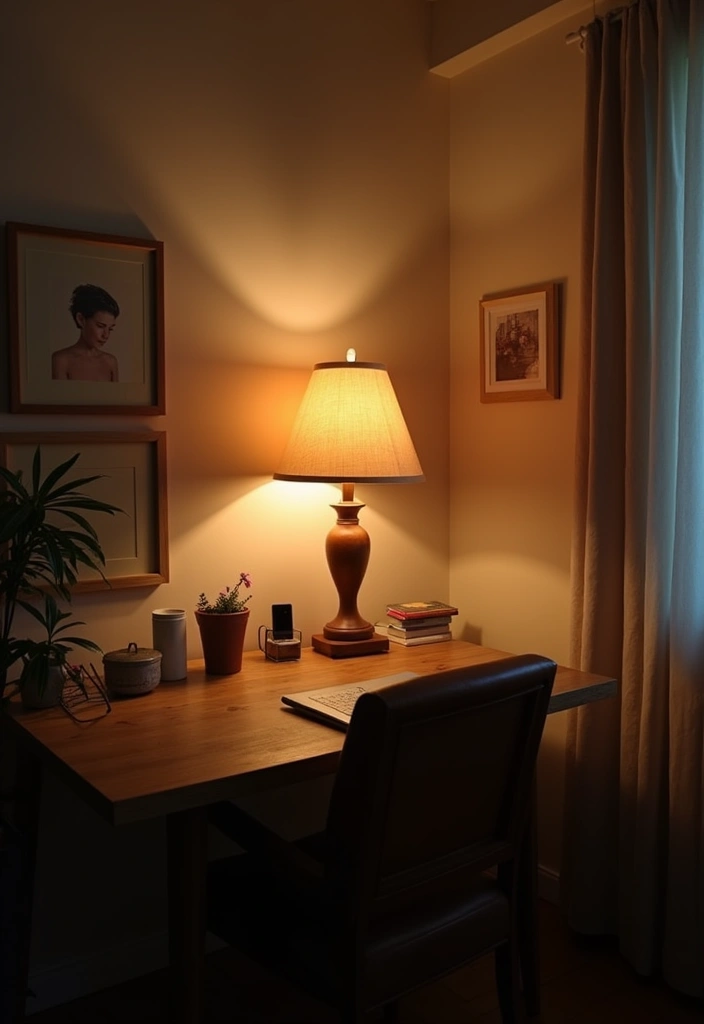
Lighting plays a crucial role in setting the mood of your Japanese home office.
Opt for soft, ambient lighting that creates a warm and inviting atmosphere.
Consider using lamps with paper shades or dimmable LED lights to adjust the brightness according to your needs.
This thoughtful lighting choice not only enhances the aesthetic but also promotes comfort and focus, making it essential for a productive workspace.
15. Cultural Touches
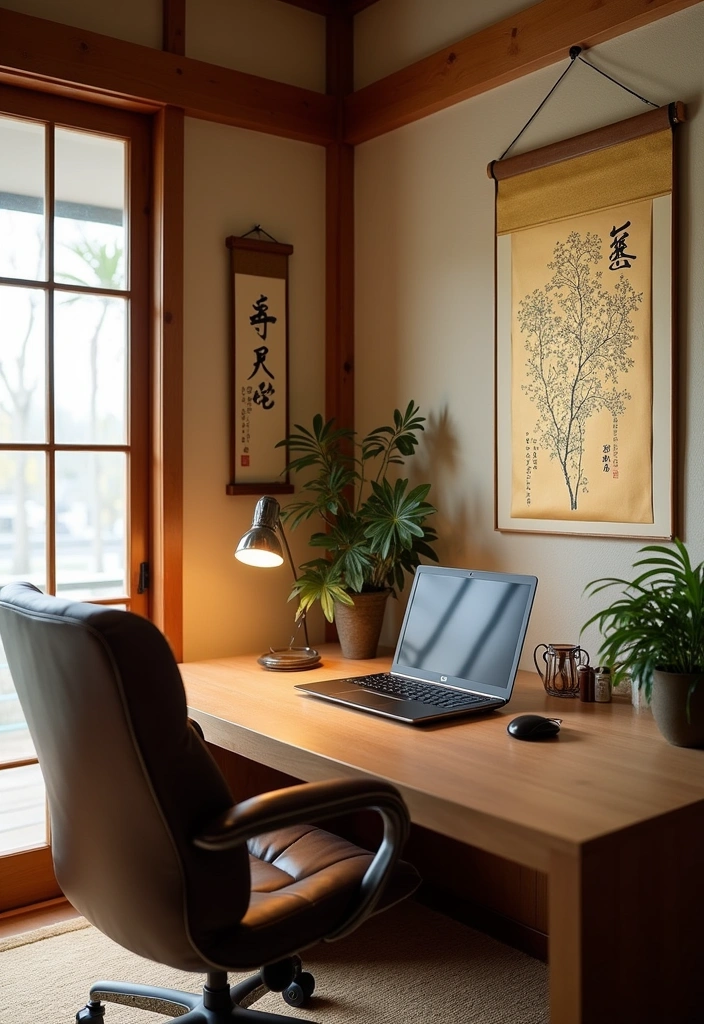
Incorporating cultural touches into your home office can add depth and personality to the space.
Consider displaying traditional Japanese items, such as a kintsugi art piece or a calligraphy scroll, to create a unique environment.
These elements not only enhance the aesthetic but also serve as conversation starters, allowing you to share your appreciation for Japanese culture.
By thoughtfully curating your decor, you create a workspace that feels distinctly yours.
Conclusion
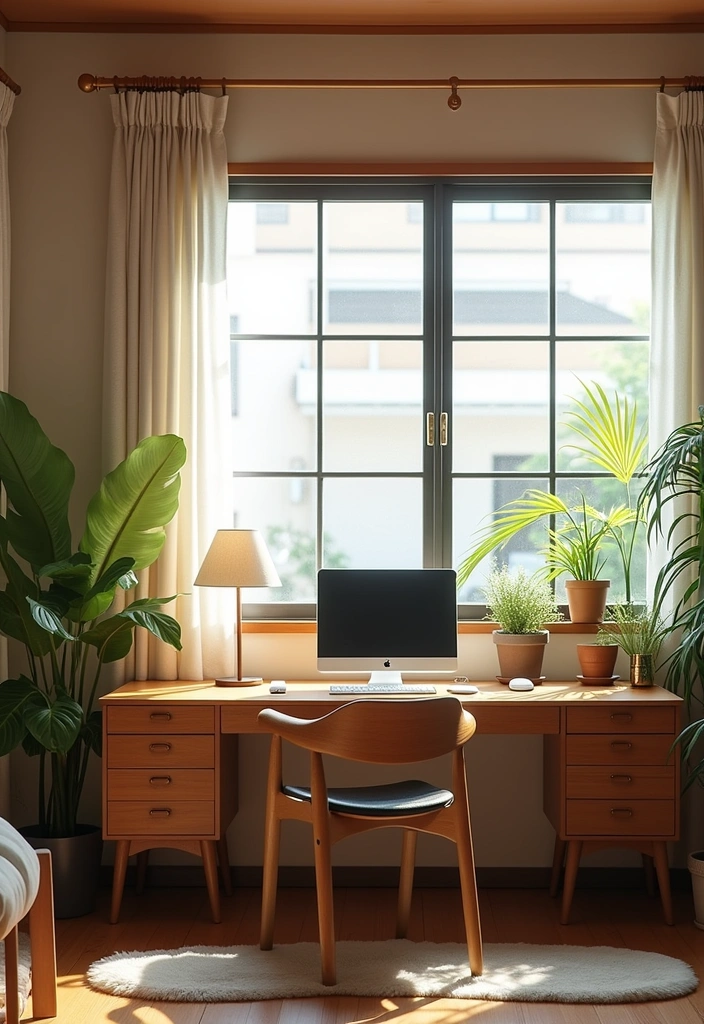
Japanese home office designs offer a perfect blend of minimalism, functionality, and beauty.
By incorporating elements that promote tranquility and productivity, you can create a workspace that inspires creativity and focus.
Whether you choose to embrace natural materials, calming colors, or cultural influences, this design philosophy can transform your home office into a sanctuary.